AgVocates Educate: Friendswood ISD Students Share Ag Literacy
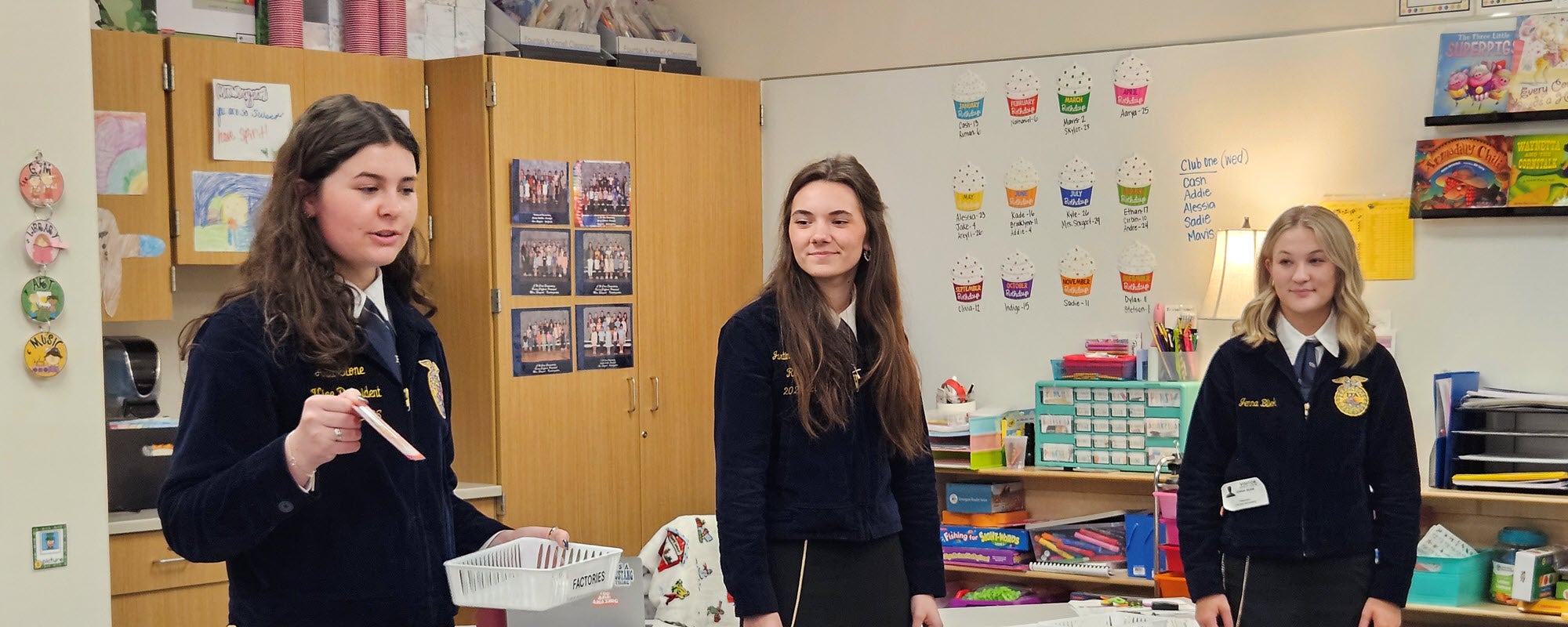
When Friendswood High School seniors and FFA members Jaxtin McCollum and Ava Stone discovered that younger students in their district didn’t know what agriculture is and its importance, they knew they had to do something to help educate them about it.
The pair have spent the last several years doing outreach for elementary school students at Friendswood ISD, a district with about 6,142 students enrolled. With support from their Agriculture Science teacher and FFA advisor, Rachel Sawyer, and their Brazoria-Galveston County Farm Bureau representative, Deana Fuchs, the AgVocates outreach program reached more than 600 students in spring 2026, Fuchs said.
Through the AgVocates Ag Literacy program, McCollum and Stone have given presentations at Cline, Windsong, and Westwood elementary schools. The presentations take place on special occasions that celebrate STEAM learning, such as Go Texan Day. While the idea was Fuchs’, McCollum and Stone put in the hard work to make the program a success at the schools. The pair even won the FFA state title for the Texas FFA Service Learning Award.

“Each school year, we gather a group or committee of Friendswood FFA students together for this project,” Fuchs said. “In the fall, I present them with several agriculture-accurate books along with a supporting activity for each book. The students then decide which book/activity they will present for that school year and help me get supplies ready for the activity if needed.”
Texas Lone Star caught up with McCollum and Stone to learn more about their work with the outreach program. Their answers, which they collaborated on, have been condensed and lightly edited.
Q: How long have you been in FFA?
We have both been involved in FFA for the past four years of high school.
Q: How long have you been participating in the literacy program?
We have been involved with this (AgVocates) committee since 2022 and became the co-chairs of the committee in 2024. Our roles shifted from listening and participating in the monthly meetings and supporting classroom presentations to leading monthly meetings and the activities during the classroom presentations.
Q: Why did you decide to participate in the agricultural literacy program? Why was it important to you?
Being an FFA member, it is easy to have a very strong understanding of what agriculture is and its personal meaning and significance. The need we discovered is that today’s young children do not know what agriculture is; therefore, it does not mean anything to them.
Obviously, this is a huge issue because it threatens the future of agriculture. This was identified by us at our very first presentation when we asked the question, ‘Can someone tell me what agriculture means?’ In a classroom of 25 second grade students, not a single hand in the room was raised. Since then, we have been determined to increase agricultural awareness and help younger generations provide their own meaning of it.

Q: How did the County Farm Bureau help you plan and prepare for your program?
The Brazoria-Galveston County Farm Bureau provides all the materials needed for our classroom presentations. They provide the agricultural literacy books, the activities, all materials needed for the activity, teacher evaluation sheets, and an informational paper packet for each member in the committee that explains a detailed plan of our presentations. The County Farm Bureau is a vital organ in the body of this program.
Q: What kind of research and work were involved in creating your literacy program?
The research done for this project primarily consisted of taking advantage of our resources. A key resource we had was the expertise of Ms. Fuchs. She has been a huge help in finding agricultural topics for our students based on age, location, and education level.
Q: What are the goals for the program?
The primary goal is to make sure every elementary student, in our hometown of Friendswood, understands basic agricultural concepts such as natural resources, dairy education, agricultural inventions, pollination, and common farming practices. Our secondary goal is to spark an interest or passion in these students, and for them to be a part of the Agriculture, Food, and Natural Resources classes offered at our high school.
Q: Has the program been successful?
There are two types of success experienced in this project. The first is our measurable success, which is the number of students and classrooms we have presented to, and the second type of success is the learning outcomes for the students. The learning outcome is based on an evaluation sheet that includes feedback to show us how well our project is received and its impact on students. After each presentation, it is collected to evaluate the program’s effectiveness and identify areas for improvement to talk about at our next meeting. Just this year, we reached three elementary schools, six different grade levels, and 42 classrooms. By the end of our presentation, according to the feedback forms, we actually saw a high level of comprehension for the concepts we presented. This is a very successful result of the heart and passion poured into the committee.

Q: How did your teacher support you and help you with this project?
Mrs. Sawyer is the agriculture teacher who oversees our committee. She communicates with the elementary schools in our city and presides over the activities and lessons. Mrs. Sawyer is a key factor in maintaining the success and longevity of this project.
Q: Since you are seniors, what are your hopes for the program after high school?
As the year ends and we go off to college, our hopes are that the program continues to grow and reach all elementary classes at Friendswood. We want students to be able to confidently answer the question, ‘What is agriculture?’ Another hope we share for this committee is to increase agricultural participation among youth through the high school level. Through participating at the college level in the collegiate Texas Farm Bureau, we are dedicated to helping others find their passion for agriculture, advocating, and education.
Q: What has made you most proud?
What has made us the most proud is seeing local elementary students who are excited and eager to learn about agriculture. A big joy we have experienced is when students remember who we are from the year prior. It makes us so proud to be a part of this impact, no matter how big or small.
Q: Anything else you’d like to share with readers?
Our work and dedication to this committee and the agricultural industry is done with a servant’s heart and a genuine love of teaching students about agriculture. We are so beyond grateful to share our passion with today’s youth through this committee.
Friendswood ISD students Jaxtin McCollum and Ava Stone visited with elementary school students across the district this year to teach younger students about agriculture and its importance. With support from the Texas Farm Bureau’s AgVocates Ag Literacy program, the pair reached about 600 students.
Photos courtesy of the Brazoria-Galveston County Farm Bureau
This article first appeared in the June/July 2026 issue of Texas Lone Star.

Texas Lone Star Magazine
Enjoy this story? Find other impactful public education stories in Texas Lone Star, TASB's flagship publication. Browse the latest issue and multi-year archive.
Mary Ann Lopez
Mary Ann Lopez is a senior communications specialist for TASB.